Dodal
Temperance · XIIII
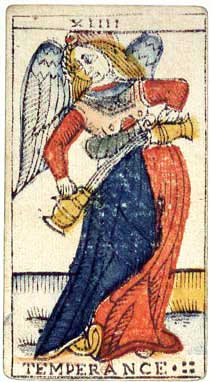
A winged figure pours a stream between two vessels. The dress is divided into contrasting coloured areas. The feet remain on the ground; no pool or distant path is drawn.
First follow the liquid. Then ask whether the vessels remain separate or feed a shared operation. Temperance and Art retain a relationship while changing the work pictured.
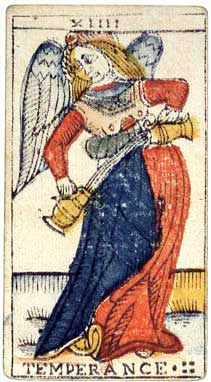
Jean Dodal · Lyon, 1701–1715
Open the source image ↗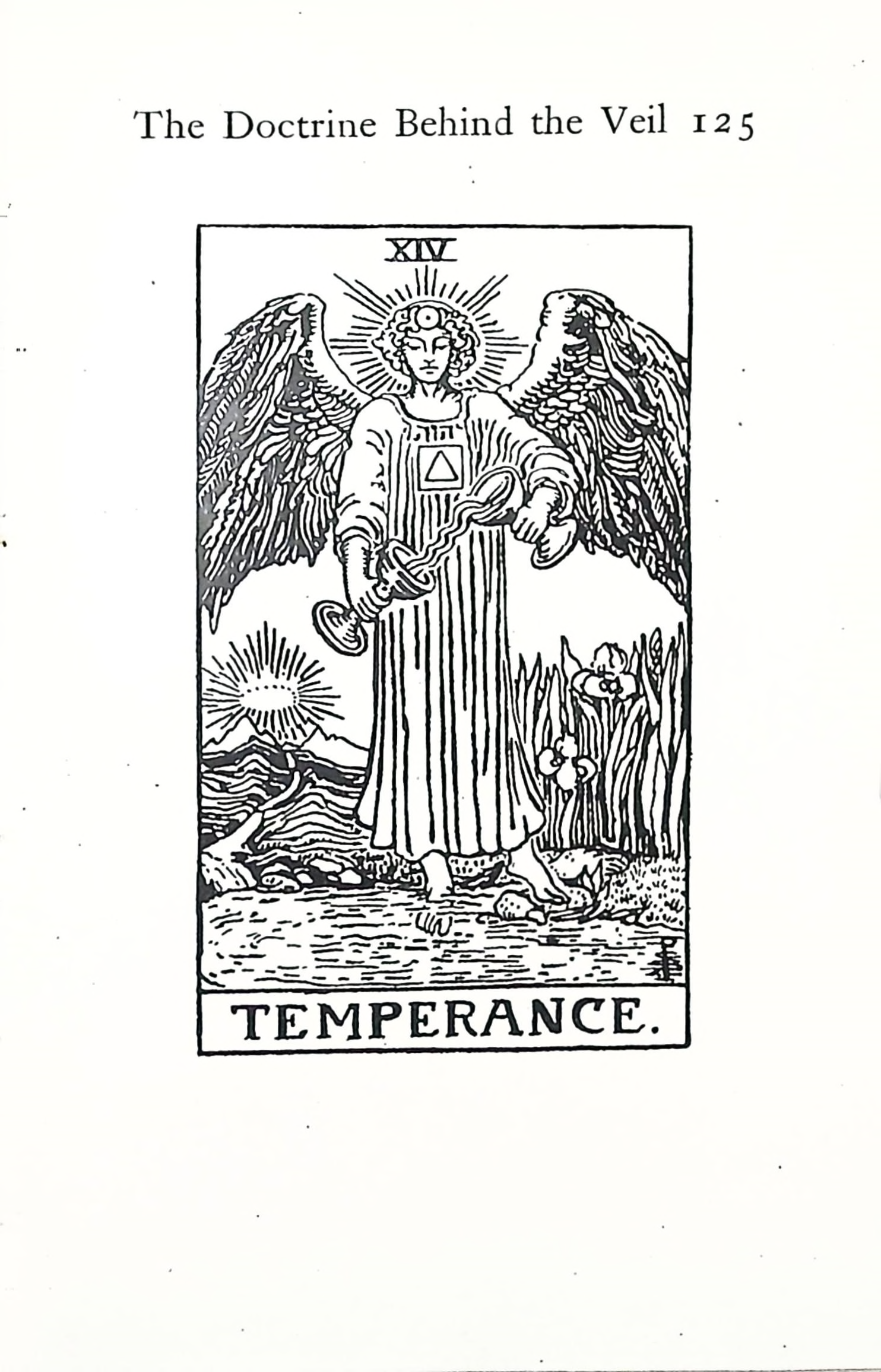
Pamela Colman Smith · 1922 printing, p. 125
Open the source scan page ↗Dodal
A winged figure pours a stream between two vessels. The dress is divided into contrasting coloured areas. The feet remain on the ground; no pool or distant path is drawn.
Smith
A winged figure transfers liquid between cups with one foot in water and one on land. A path leads toward a radiance in the distance. A triangle within a square appears on the chest.
Harris
A two-faced figure brings a flame and liquid toward a cauldron. A pale lion and red bird flank it. Rainbow bands and an upward arrow connect the vessel to the upper part of the design.
Open Harris’s painting and reference page ↗Waite describes the harmony of psychic and material natures and explicitly says the figure is neither male nor female. He connects the path and distant light with his account of eternal life.
Crowley treats Art as the fulfilment of the Lovers: the paired figures become a single androgyne. His account identifies a white lion and red eagle, counterchanged from the earlier card, and the cauldron as the place of their combination.
Write one thing you can point to in the image, one interpretation from a named author, and one inference of your own. Keeping the three separate gives you something useful to revisit.
The Triptych essay develops creativity through alchemical imagery. Its contemporary applications can be read alongside the distinct claims of Waite and Crowley, including their different accounts of the figure.
The Dodal cards are one early-eighteenth-century Marseille witness. The black-and-white Smith plates come from the 1922 Rider reprint, whose title verso lists first publication in 1910. Colours in later editions can differ.
The images shown here are reproduced from public-domain sources, with their original borders and page context.
Harris’s paintings are linked on their host’s reference pages. Crowley’s text is the separately identified Thelemagick transcription of The Book of Thoth. Neither a modern reproduction nor a transcription replaces examination of the original artwork or edition.
